
If you’ve been craving something simple, vibrant, and packed with fresh vegetables, you’re going to adore my Baked Ratatouille with Fresh Vegetables Recipe. This dish is one of those classics that just warms your soul—plus, it’s bursting with flavor that makes you forget how healthy it actually is. I love sharing this recipe because it highlights fresh veggies in such a beautiful, comforting way, and I promise you’ll want to make it again and again.
Why You’ll Love This Recipe
- Freshness Front and Center: Using quality seasonal vegetables makes this dish crispy on the edges and tender inside, offering freshness in every bite.
- Simple Yet Sophisticated: The layering technique turns humble veggies into an elegant, eye-catching presentation perfect for impressing guests.
- Versatility: Whether you’re vegan, vegetarian, or just looking for a hearty side, this baked ratatouille fits the bill beautifully.
- Make-Ahead Friendly: It’s even better the next day and freezes well, so it’s great for meal prep or easy weeknight dinners.

Ingredients You’ll Need
All the vegetables in this Baked Ratatouille with Fresh Vegetables Recipe play wonderfully together, their flavors blending as they bake. Using fresh, high-quality produces makes a huge difference, especially since the seasoning is simple.

- Crushed tomatoes: Pick good quality canned tomatoes or fresh blended if you can; they create the rich base of the sauce.
- Extra virgin olive oil: This adds smoothness and helps with roasting; I like to use a fruity, cold-pressed olive oil.
- Apple cider vinegar: A touch of tang brightens the tomato sauce and balances the sweetness of the veggies.
- Minced garlic: Fresh garlic is key for that aromatic punch without overpowering the dish.
- Fresh basil: Adds that classic ratatouille fragrance—you’ll want to save some for garnish too!
- Herbs de Provence: This mix gives the dish its signature French countryside vibe; if you’re sensitive to lavender, you can swap it for rosemary, oregano, and thyme.
- Salt, black pepper, chili powder: For seasoning and a subtle kick, making the flavors pop.
- Sweet or red onion: Choose onions that are sweet and firm for good texture and flavor.
- Zucchini: Fresh and firm zucchini holds its shape well during baking.
- Japanese eggplant: I love the tender texture it offers after baking; if you can’t find it, Italian eggplant works fine as long as you cut it appropriately.
- Fresh tomatoes (Roma preferred): They add juiciness and a slight acidity that balances the roundness of the other vegetables.
Variations
I like to keep this recipe pretty classic, but I’ve found a few tweaks that work depending on what you have on hand or your dietary preferences. Don’t hesitate to make it your own!
- Add cheese: When I want it a little heartier, sprinkling a bit of goat cheese or vegan cheese on top before the last 10 minutes of baking gives it a decadent touch.
- Different veggies: I sometimes swap zucchini for yellow squash or add bell peppers for a splash of color and sweetness.
- Herb swaps: If you can’t find herbs de Provence, a mix of rosemary, thyme, and oregano does wonders and keeps that herby aroma alive.
- Spice it up: For those who love heat, adding a dash more chili powder or even red pepper flakes gives a nice kick.
How to Make Baked Ratatouille with Fresh Vegetables Recipe
Step 1: Prep the Sauce Base
Start by preheating your oven to 350°F and lightly greasing your baking dish. In a medium bowl, combine the crushed tomatoes with olive oil and apple cider vinegar. Stir in minced garlic, sliced fresh basil, herbs de Provence, salt, black pepper, and chili powder. Give it a good stir until everything is evenly mixed. This tomato base is gently seasoned to complement—not overpower—the veggies, so use quality ingredients here to get the best result.
Step 2: Arrange the Veggies Beautifully
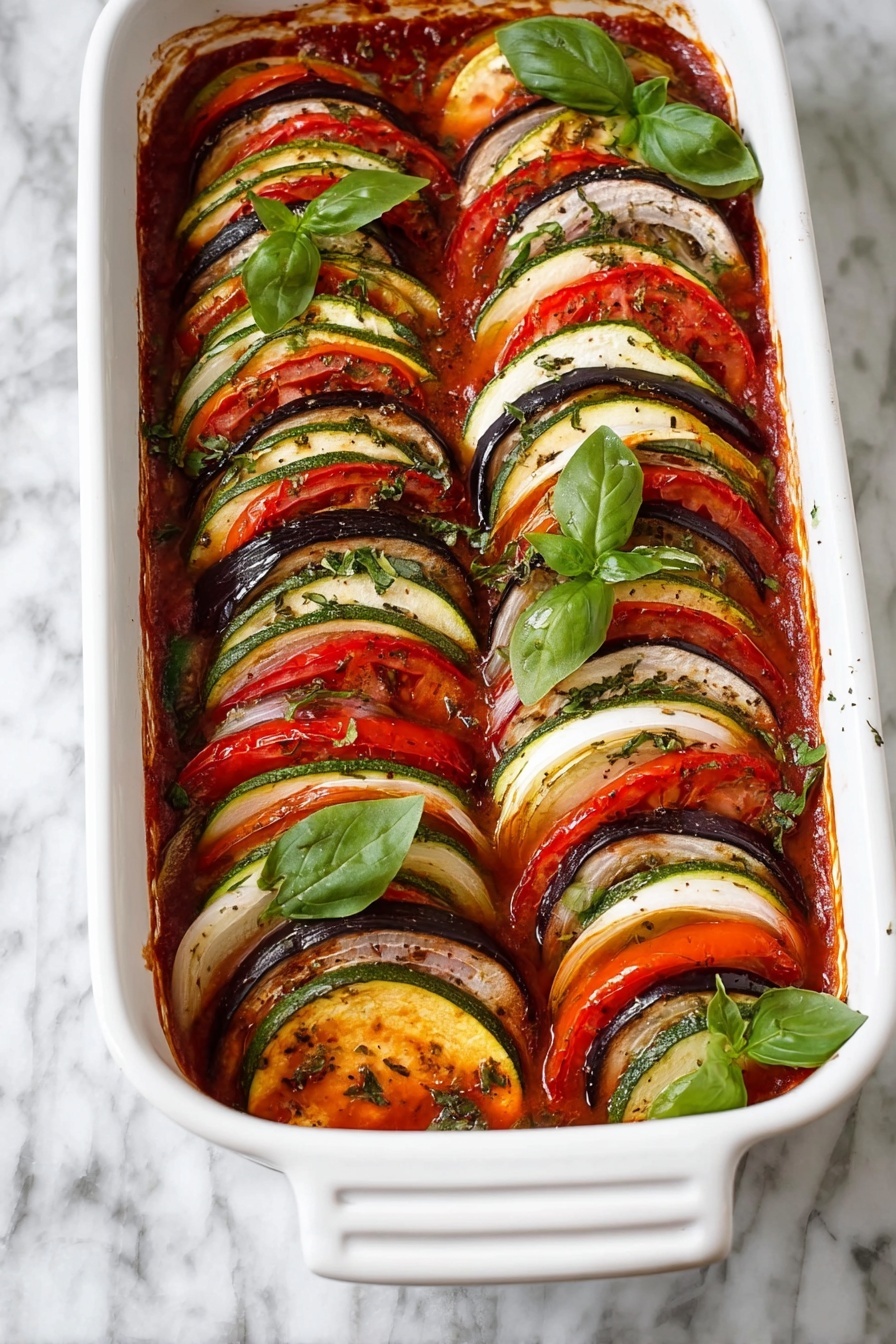
Pour the tomato sauce mixture into the bottom of your baking dish and spread it evenly. Now comes the fun part—stacking the sliced veggies! I like to alternate onion, zucchini, eggplant, and tomato slices in a repeating pattern. Arrange them upright in rows, leaning against the edge of the dish like a little vegetable rainbow. This not only looks stunning but allows the vegetables to cook evenly and soak up the flavors from the sauce below.
Step 3: Oil and Bake
If you want that perfectly brown top, brush or spray a bit of olive oil over the exposed vegetables. This step is optional—I sometimes skip it if I’m in a hurry, but it definitely adds a subtle crispness. Now pop it in the oven and bake for about an hour. You’re looking for bubbling sauce at the bottom and veggies that are tender and slightly caramelized on the edges. When you remove it, let it cool just a bit to let the flavors settle.
Pro Tips for Making Baked Ratatouille with Fresh Vegetables Recipe
- Even Slicing: I always slice my vegetables about the same thickness so they cook evenly – this avoids that frustrating “too mushy” or “too crunchy” problem.
- Fresh Basil at the End: Adding fresh basil right before serving keeps the flavor bright and vibrant, instead of it getting lost during baking.
- Use a Shallow Dish: A wider, shallower baking dish helps those beautiful stacks of veggies stay upright and cook through evenly.
- Don’t Overcrowd: Give the veggies a little breathing room so heat circulates well; tight crowding can lead to soggy, steamed veggies instead of roasted.
How to Serve Baked Ratatouille with Fresh Vegetables Recipe

Garnishes
I love topping the ratatouille with extra torn fresh basil leaves and a light drizzle of good-quality olive oil right before serving. It adds freshness and a lovely finish that really wakes up the whole dish. Sometimes, I sprinkle a bit of flaky sea salt for texture and a little brightness.
Side Dishes
My family goes crazy for serving this alongside fluffy mashed potatoes or a scoop of creamy polenta. It also pairs beautifully with crusty bread to soak up all the rich tomato sauce. When I want to boost the protein, a simple grilled chicken or roasted legumes work perfectly.
Creative Ways to Present
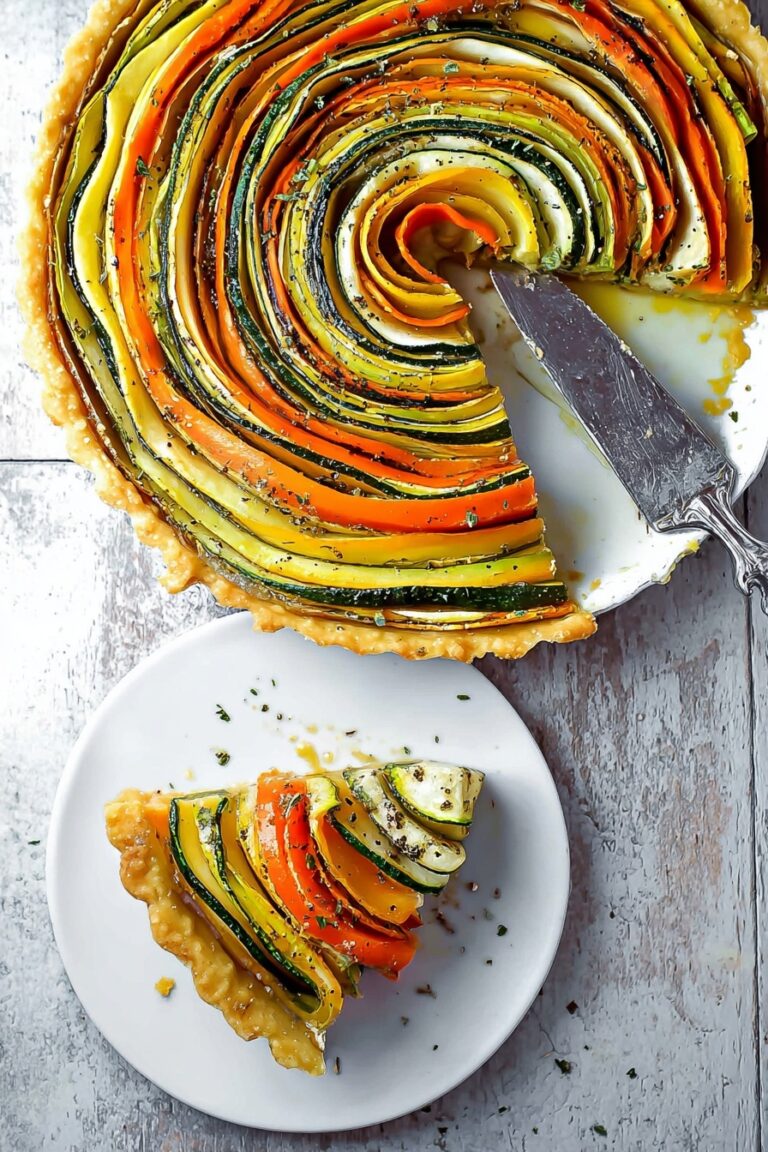
For special occasions, I like to layer the veggies in a spiral pattern on a round pan, making it a centerpiece-worthy dish. I’ve also tried serving individual mini ratatouille portions in small ramekins for a fancy dinner party presentation—everyone loved it, and it’s such a fun conversation starter!
Make Ahead and Storage
Storing Leftovers
I usually store leftovers in an airtight container in the fridge, and it keeps beautifully for up to three days. The flavors actually seem to deepen overnight, making it an excellent make-ahead dish.
Freezing
If I’m making a double batch, I let it cool completely, then freeze portions in separate containers. It freezes really well and lasts up to three months. Just make sure to thaw it in the fridge overnight before reheating for the best texture.
Reheating
To reheat, I prefer using an oven or toaster oven at moderate heat to keep the veggies from turning soggy. If you’re in a hurry, microwaving works too—just cover the dish with a damp paper towel to retain moisture and heat gently.
FAQs
-
Can I make this Baked Ratatouille with Fresh Vegetables Recipe vegan?
Absolutely! This recipe is naturally vegan and vegetarian as written, using no animal products. You just need fresh vegetables, herbs, and spices to create a delicious, hearty meal.
-
What if I don’t have Japanese eggplant?
No worries! You can substitute with Italian eggplant or even a combination of zucchini and other summer squash. Just make sure to slice them evenly to ensure everything cooks at the same rate.
-
Can I prepare this recipe ahead of time?
Yes! You can assemble it, cover, and refrigerate it for several hours before baking. It’s great for prepping meals in advance, and leftovers reheat wonderfully.
-
Is this recipe gluten-free?
Definitely! There are no gluten-containing ingredients here, making it a safe and tasty choice for a gluten-free diet.
-
How do I keep the vegetables from getting mushy?
The key is slicing vegetables evenly and baking at a moderate temperature without overcrowding the pan. Also, layering in a single layer helps the veggies roast rather than steam.
Final Thoughts
When I first tried this Baked Ratatouille with Fresh Vegetables Recipe, I was amazed at how simple ingredients could create something so stunning and flavorful. It’s become a go-to whenever I want a comforting yet light meal, and I bet once you try it, you’ll feel the same. Give it a shot—you’ll enjoy the process of layering those colorful veggies and the lovely aroma filling your kitchen. Trust me, this one’s a keeper, and it might just become your new favorite way to celebrate fresh vegetables.
Print
Baked Ratatouille with Fresh Vegetables Recipe
- Prep Time: 20 minutes
- Cook Time: 1 hour
- Total Time: 1 hour 20 minutes
- Yield: 4 servings
- Category: Main Dish
- Method: Baking
- Cuisine: French
- Diet: Gluten Free, Vegan, Vegetarian, Paleo, Low Carb, Whole30
Description
A vibrant and flavorful Ratatouille recipe featuring layers of fresh summer vegetables baked in a tomato and herb sauce. This classic French dish is perfect as a healthy main or a side, highlighting the natural sweetness of zucchini, eggplant, tomatoes, and onions, infused with herbs de Provence and garlic.
Ingredients
Tomato Sauce
- 1 cup crushed tomatoes
- 1 Tablespoon extra virgin olive oil
- 1/4 teaspoon apple cider vinegar
- 1 teaspoon minced garlic
- 1 Tablespoon fresh basil, about 3-4 large leaves, sliced, plus more for garnish
- 1 teaspoon herbs de Provence spice mix
- 1/4 teaspoon salt
- 1/4 teaspoon black pepper
- 1/4 teaspoon chili powder
Vegetables
- 1 medium sweet or red onion, sliced
- 1-2 large zucchini, about 1 1/2 cups slices
- 1 large Japanese eggplant, about 3 cups slices
- 3 large fresh tomatoes (Roma preferred), about 3 cups slices
Instructions
- Preheat and Prepare Pan: Preheat your oven to 350°F (175°C). Lightly grease a 6″x9″ baking dish or an 8″x8″ square pan to prevent sticking and set it aside.
- Make Tomato Mixture: In a medium mixing bowl, combine the crushed tomatoes, extra virgin olive oil, and apple cider vinegar. Stir in the minced garlic, sliced basil, herbs de Provence, salt, black pepper, and chili powder until well incorporated.
- Layer Sauce: Pour the tomato mixture into the prepared baking dish, spreading it into an even layer to coat the bottom evenly, which will serve as the flavorful base for the ratatouille.
- Arrange Vegetables: Stack the vegetable slices in an alternating pattern—such as onion, zucchini, eggplant, tomato—and place them vertically against the side of the pan. Continue layering until you fill the dish in neat rows and use all the vegetable slices.
- Optional Oil Brush: Optionally, brush or lightly spray the tops of the arranged vegetables with olive oil to encourage browning and enhance appearance, though this step can be skipped if preferred.
- Bake: Bake in the preheated oven for about 1 hour, or until the tomato sauce at the bottom is bubbling and the vegetables are tender and cooked through.
- Garnish and Serve: Remove from oven, garnish with additional fresh chopped basil if desired, and serve hot or cold as a delicious and healthy dish.
Notes
- This recipe can be baked in an 8″x8″ square pan with similar baking times.
- Use the highest quality vegetables available to maximize flavor, as the dish highlights fresh produce.
- If Japanese eggplant is unavailable, substitute Italian eggplant, cutting slices into halves or quarters for even cooking.
- Vegetable substitutions may include bell peppers or yellow squash for zucchini, and shallots for onions, aiming for similarly sized slices for consistent cooking.
- For those sensitive to lavender in herbs de Provence, replace with 1/4 teaspoon each of dried or fresh rosemary, oregano, and thyme.
- Recipe yield serves 2-3; double for larger crowds using a 9″x12″ pan.
- Optionally finish by drizzling with good quality olive oil for enhanced richness.
- This recipe is naturally gluten free, vegetarian, vegan, paleo-friendly, low carb, and Whole30 compliant.
- To make it heartier, add vegan or dairy cheese on top or serve over grains like quinoa or mashed potatoes.
- Store leftovers in an airtight container refrigerated up to 3 days or freeze up to 3 months; reheat in the microwave after thawing.
Nutrition
- Serving Size: 1/4 of recipe (approx. 1 cup)
- Calories: 140
- Sugar: 7g
- Sodium: 220mg
- Fat: 7g
- Saturated Fat: 1g
- Unsaturated Fat: 6g
- Trans Fat: 0g
- Carbohydrates: 18g
- Fiber: 5g
- Protein: 3g
- Cholesterol: 0mg