
If you’re craving a pasta dish that feels like a warm hug from the Italian countryside but comes together without fuss, you’re going to love this Easy Tomato Pasta with Fresh Basil Recipe. It’s one of those recipes that I keep in my back pocket for busy weeknights or anytime I want a dish that’s simple, fresh, and bursting with flavor. With just a handful of ingredients, you’ll create a sauce that tastes like it’s been simmering for hours, yet it’s surprisingly straightforward. Let me walk you through why this recipe is a total winner and how you can nail it every time.
Why You’ll Love This Recipe
- Simple ingredients: You don’t need a fancy pantry—just pantry staples and fresh basil make magic.
- Rich, authentic flavor: Slow simmering brings out a deep tomato sweetness you’ll keep coming back for.
- Versatile and customizable: Add a pinch of heat or toss in your favorite pasta shape to make it your own.
- Quick to prepare: A total time of just over an hour for a restaurant-worthy sauce that’s mostly hands-off.

Ingredients You’ll Need
Each item here works together to build a sauce that’s bright but mellow, simple but sophisticated. Choosing good quality ingredients is key—especially for the tomatoes and olive oil.
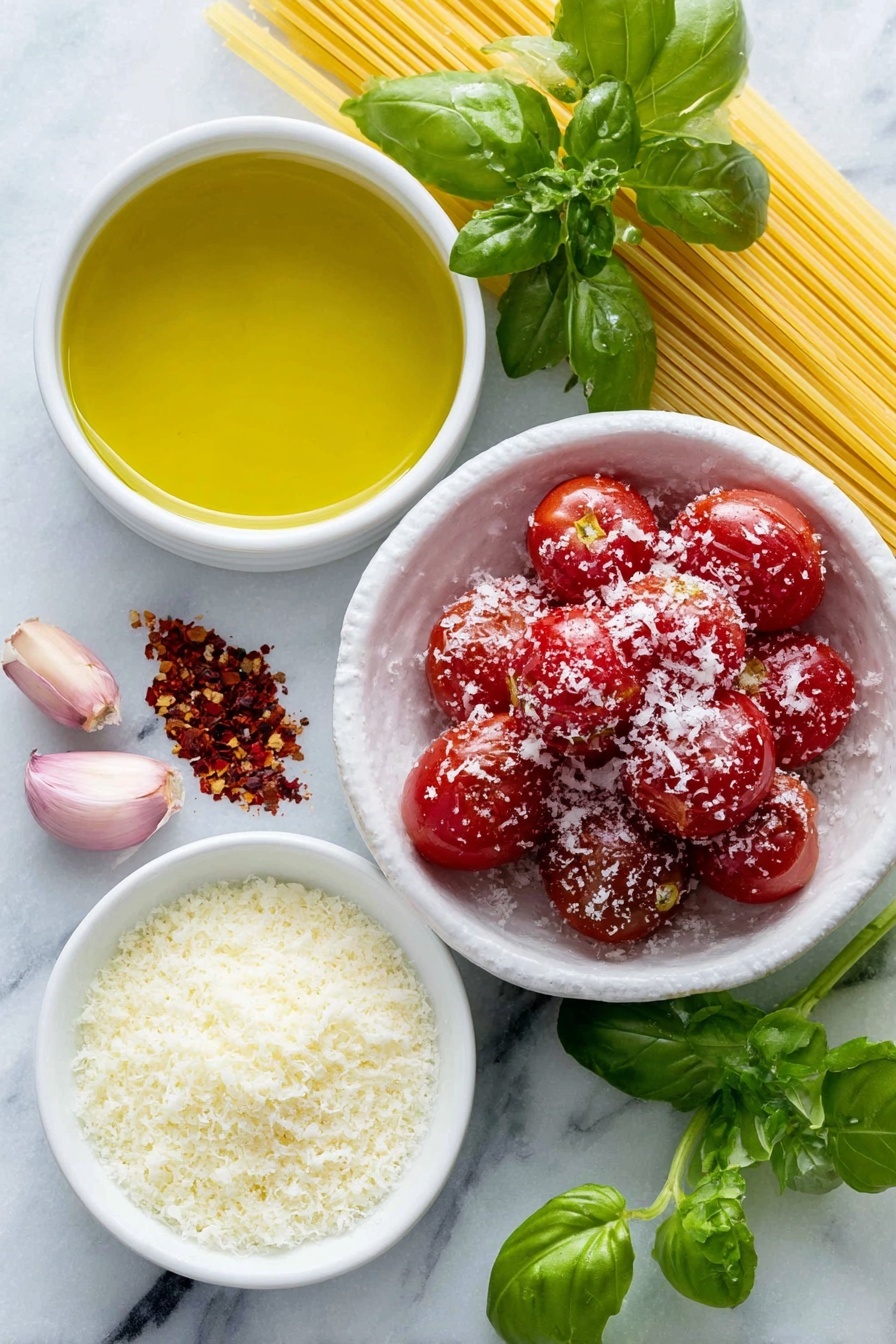
- Extra virgin olive oil: The foundation of flavor here, opt for a fruity, high-quality one you enjoy tasting on its own.
- Garlic clove: Just one, gently crushed to release gentle aroma without overpowering the sauce.
- Red pepper flakes (optional): For a subtle kick—skip if you prefer a milder sauce.
- Whole peeled tomatoes (canned): Look for good quality, San Marzano-style tomatoes if you can find them.
- Kosher salt: Essential for balancing flavors throughout the cooking.
- Basil branch + fresh leaves: Fresh basil is what transforms this sauce from ordinary to just wow.
- Spaghetti or your favorite pasta: I love spaghetti with this sauce, but feel free to choose whatever shape you like.
- Freshly grated Parmesan cheese (optional): Adds a salty, nutty finish if you’re in the mood.
Variations
I’m a big fan of tweaking this Easy Tomato Pasta with Fresh Basil Recipe depending on what I have on hand or what mood I’m in. You can keep it classic or jazz it up without losing that fresh flavor that makes this dish so special.
- Add some heat: I like to toss in extra red pepper flakes or even a bit of cayenne if I want to surprise my family with a spicy twist.
- Vegetable boost: Sometimes I sauté mushrooms or zucchini in the olive oil before adding tomatoes to sneak in some veggies.
- Use different pasta shapes: Penne or farfalle work great if you want a change and help hold that sauce differently.
- Make it vegan: Just skip the Parmesan or use a plant-based alternative, and you’re all set without losing any flavor.
How to Make Easy Tomato Pasta with Fresh Basil Recipe
Step 1: Gently Infuse the Olive Oil
Start by warming the olive oil in a large saucepan over medium-low heat. Toss in the crushed garlic and let it sizzle gently for about 2 minutes. The key is to coax out that garlicky aroma without letting the garlic brown, which can turn bitter. I usually press the garlic lightly against the pan to help release its flavour. Add a pinch of red pepper flakes here if you want a little subtle heat — but feel free to leave it out if you prefer mild. If you want a softer garlic hint, I’ve learned it’s best to fish the garlic out after infusing the oil.
Step 2: Add the Tomatoes and Bring to a Simmer
Carefully pour the entire can of whole peeled tomatoes, juice and all, into the pan. I grab a potato masher or a wooden spoon to break up the tomatoes into chunky pieces — it’s satisfying and gives that rustic feel to the sauce. Sprinkle in half a teaspoon of kosher salt and then crank up the heat to medium-high till it starts boiling. Once boiling, reduce the heat to keep it at a gentle simmer. Cover the pan partially to let evaporation happen but avoid splatters.
Step 3: Simmer and Develop Deep Flavors
This is where the magic happens. Stir the sauce occasionally and simmer for 35 to 40 minutes until you see the color deepen and the sauce thickens—oil from the olive oil will pool on the surface, which is a great sign. Sometimes I find the sauce can thicken faster than it sweetens, so don’t hesitate to add a splash of water to loosen the texture. The goal is a sauce that’s rich, vibrant, and well balanced. Patience pays off!
Step 4: Strain for Smoothness and Season
Once the sauce has thickened, turn off the heat and let it rest for about 10 minutes. This cooling helps the flavors settle. Then, press the tomatoes through a fine mesh strainer or use a food mill if you have one—that’s just how I get the super-smooth, silky texture I adore. Pour the smooth sauce back to the pan, give it a taste, and add a little more salt if you think it needs it.
Step 5: Add Fresh Basil and Final Touches
Stir in the remaining olive oil and lay a fresh branch of basil on top. Bring the sauce back to a gentle simmer and cook it over medium heat for about 15 minutes. You’ll notice the basil leaves wilt and infuse the sauce with their sweet, herbaceous notes. After this, discard the basil branch but feel free to toss in a few fresh leaves for garnishing later. Cover the pan to keep the sauce warm while you cook your pasta.
Step 6: Cook Pasta and Combine
Bring a large pot of water to a rolling boil and salt it generously—think salty like the sea. Cook 1 pound of spaghetti until just al dente following the package instructions. When it’s ready, use tongs, a pasta fork, or a slotted spoon to transfer the pasta directly into the pan with your beautiful sauce. Add a splash of that starchy pasta water—it helps the sauce cling to every strand. Toss gently over low heat for about 2 minutes until the pasta is evenly coated and perfectly tender.
Step 7: Serve and Enjoy
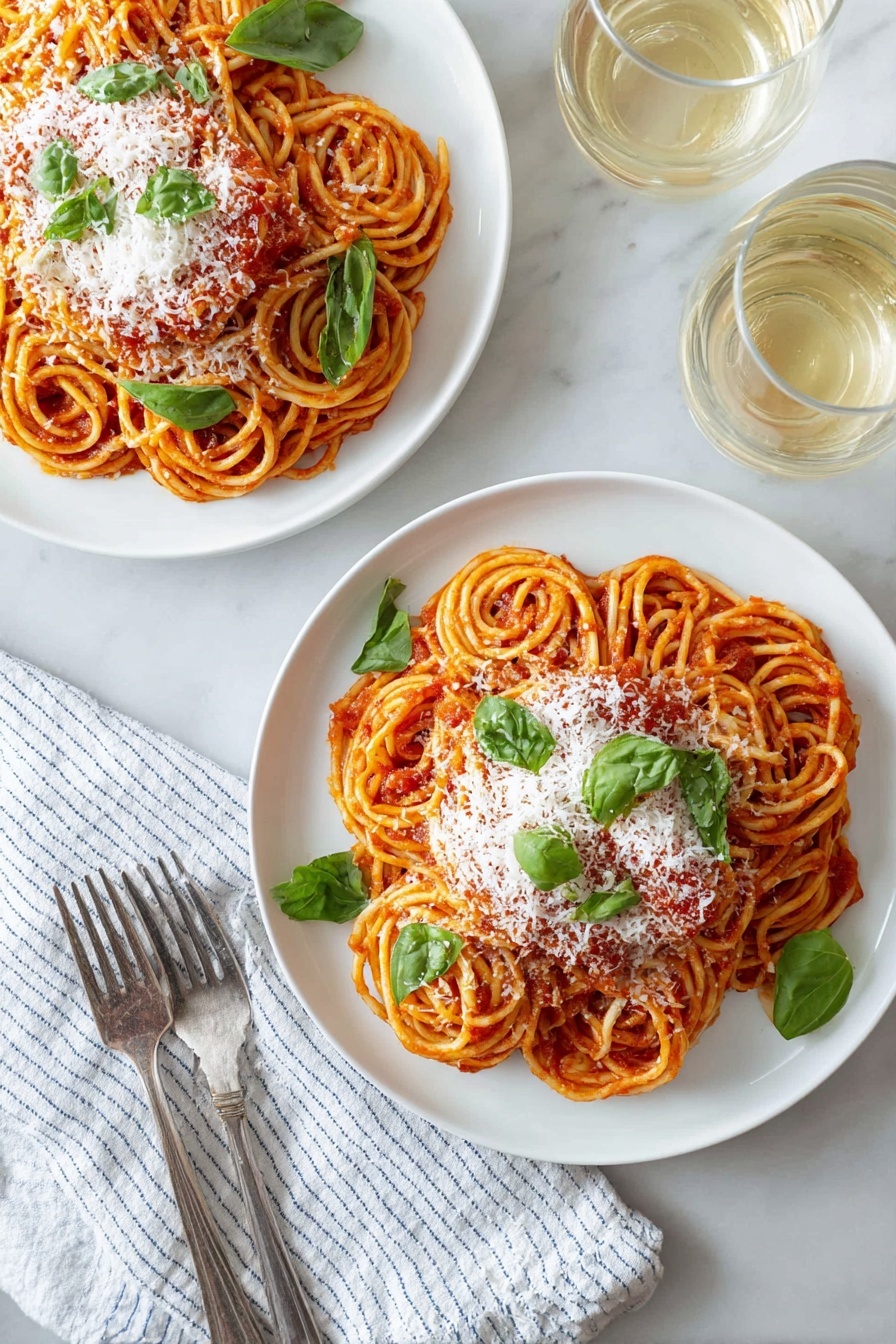
Dish the pasta into bowls, spooning any extra sauce over the top. If you love Parmesan, grate some fresh over each serving—that salty, nutty touch just couldn’t be easier or tastier. Don’t forget to sprinkle extra fresh basil leaves on top for a gorgeous finish. This dish is at its best when eaten immediately, but leftovers have their own charm too (more on that later).
Pro Tips for Making Easy Tomato Pasta with Fresh Basil Recipe
- Garlic flavor balance: Remove the garlic from the oil after infusing if you prefer a milder background flavor without the bite of actual garlic pieces.
- Tomato crushing: Use a wooden spoon or potato masher for breaking up canned tomatoes—it preserves texture if you don’t want a fully smooth sauce.
- Pasta water magic: Always reserve pasta water before draining—it’s the secret to a perfectly glossy, clingy sauce.
- Simmer patience: Don’t rush the simmering; that slow bubbling time deepens the tomato flavor and mellows acidity beautifully.
How to Serve Easy Tomato Pasta with Fresh Basil Recipe
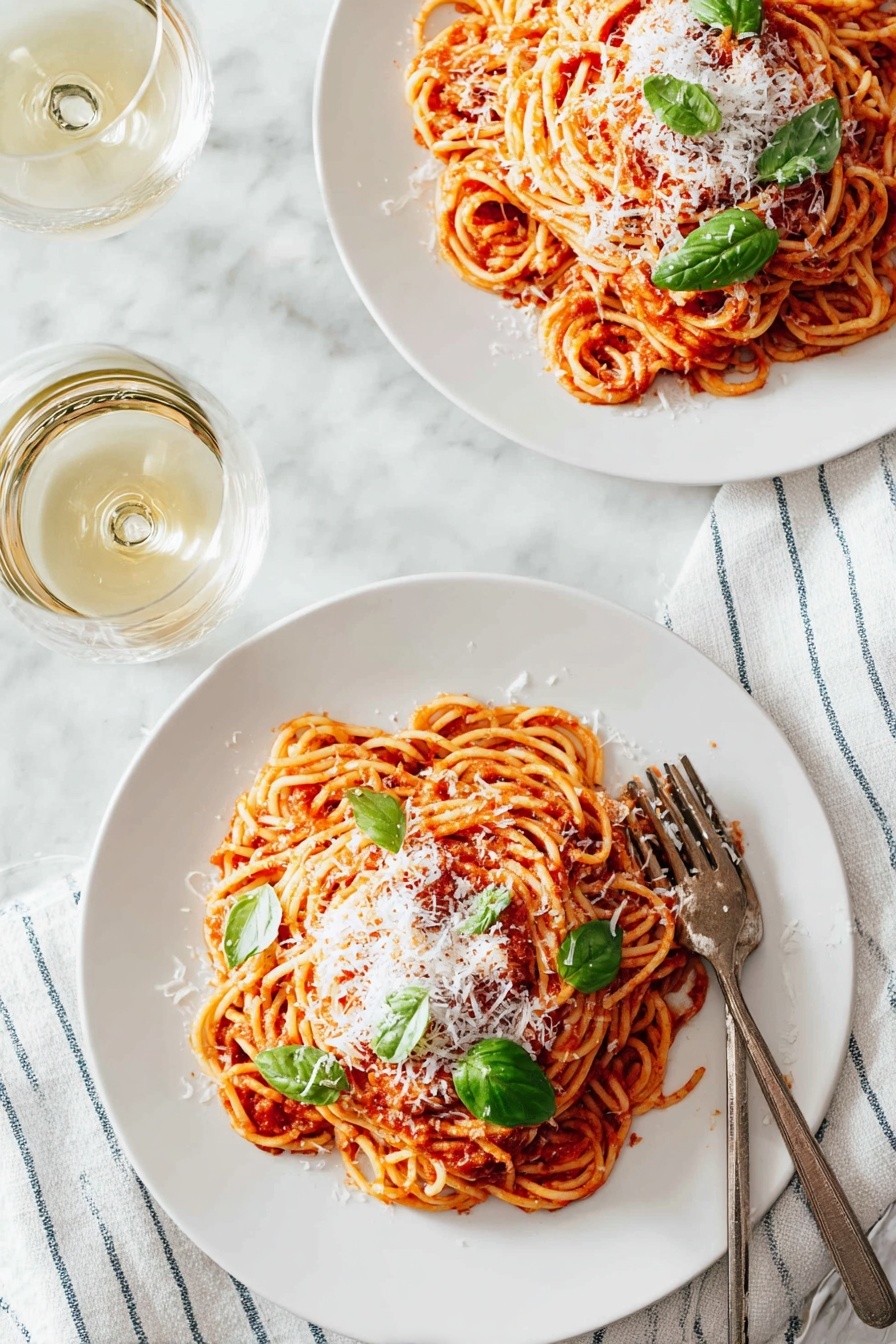
Garnishes
I always go for fresh basil leaves because they add an irresistible pop of color and herbal brightness right at the end. A sprinkle of freshly grated Parmesan (or nutritional yeast for a vegan touch) brings that perfect umami finish. Sometimes I like to drizzle just a little more good olive oil on top for extra silkiness.
Side Dishes
My go-to sides here are a crisp green salad dressed with lemon vinaigrette and some crusty garlic bread to mop up every last bit of sauce. Roasted vegetables also pair beautifully, or a simple bowl of marinated olives makes for a classic Italian-inspired spread.
Creative Ways to Present
For dinner parties, I love serving this pasta in individual shallow bowls, topped with a nest of basil leaves and a small Parmesan crisp on the rim. For a rustic family meal, piling it onto a large wooden board with plenty of garlic bread and sharing bowls feels warm and inviting. Adding a drizzle of bright green basil pesto over the sauce can elevate the presentation and flavor for special occasions.
Make Ahead and Storage
Storing Leftovers
I usually store leftover sauce separately from the pasta in airtight containers in the fridge for up to 3 days. This keeps the pasta from getting soggy and the sauce tasting fresh. When I’m ready to eat again, I reheat the sauce gently and toss it with freshly cooked pasta for the best texture.
Freezing
I love that this sauce freezes really well. Once cooled, I pop it in freezer-safe containers and it lasts for up to 3 months. When I pull it out, I thaw it overnight in the fridge or a few hours on the counter. It’s perfect to have on hand for quick dinners when you’re running low on fresh ingredients.
Reheating
To reheat, I gently warm the sauce on low heat in a saucepan so it doesn’t scorch. Then, I add freshly cooked pasta to the warm sauce right before serving. This keeps the texture lively and stops the noodles from turning mushy—something I wish I’d learned much earlier!
FAQs
-
Can I use fresh tomatoes instead of canned for this Easy Tomato Pasta with Fresh Basil Recipe?
Absolutely! If you have ripe, juicy tomatoes, you can use fresh ones—about 2 to 3 pounds peeled and roughly chopped. Keep in mind that fresh tomatoes may add more water, so you might need to simmer longer to reach the same concentrated flavor as canned tomatoes.
-
What pasta works best with this tomato and basil sauce?
Classic spaghetti is my personal favorite since its thin strands let the sauce shine, but feel free to use penne, fettuccine, or even rigatoni. Sauces like this are versatile and pair well with a range of pasta shapes, especially those that can trap sauce.
-
Do I have to strain the sauce through a sieve?
Not at all! Straining helps you achieve that silky smooth consistency, but if you prefer a chunkier sauce with more texture, just mash the tomatoes well in the pan and skip the straining step. I do this when I want a rustic feel to the dish.
-
How can I add protein to this dish for a more filling meal?
Great question! You can stir in cooked chicken, sautéed shrimp, or even browned Italian sausage. For vegetarian protein, tossed-in chickpeas or white beans work well and keep things hearty.
Final Thoughts
This Easy Tomato Pasta with Fresh Basil Recipe holds a special spot in my heart because it proves that simple ingredients, given a bit of love and patience, can create something truly spectacular. It’s one of those dishes that makes you feel cozy at the table but also proud of what you’ve cooked. If you try it, I hope you find the same joy in the rich, flavorful sauce and the fresh brightness that basil brings. Give it a go—you’re going to impress yourself (and anyone lucky enough to share it with you!).
Print
Easy Tomato Pasta with Fresh Basil Recipe
- Prep Time: 5 minutes
- Cook Time: 1 hour
- Total Time: 1 hour 5 minutes
- Yield: Serves 4
- Category: Main Course
- Method: Stovetop
- Cuisine: Italian
- Diet: Vegetarian
Description
Pasta Pomodoro is a classic Italian dish featuring a simple yet flavorful tomato sauce made from whole peeled tomatoes, olive oil, garlic, and fresh basil. This recipe showcases a slow-simmered tomato sauce infused with garlic and basil, combined with perfectly cooked al dente pasta for a comforting and delicious meal.
Ingredients
For the Sauce
- 6 tablespoons extra virgin olive oil
- 1 garlic clove, lightly crushed and peeled
- 1 pinch red pepper flakes (optional)
- 1 (28-ounce) can whole peeled tomatoes
- Kosher salt, to taste (about 1/2 teaspoon plus extra)
- 1 basil branch, plus more leaves for garnish
For the Pasta
- 1 pound spaghetti (or packaged pasta of your choice)
- Freshly grated Parmesan cheese, for serving (optional)
Instructions
- Soften the garlic: In a large saucepan over medium-low heat, warm 1/4 cup of olive oil with the garlic clove until it sizzles, about 2 minutes. Add a pinch of red pepper flakes and press the garlic to release its flavor, taking care not to let it brown. For a milder flavor, remove the garlic after infusing the oil; leave it in for a bolder taste.
- Add the tomatoes: Carefully pour in the entire can of whole peeled tomatoes with their juice. Use a potato masher or sturdy wooden spoon to break up the tomatoes into large pieces. Season the mixture with 1/2 teaspoon kosher salt. Raise the heat to medium-high and bring to a boil, then reduce heat to maintain a gentle simmer.
- Simmer the sauce: Partially cover the pan and cook the sauce, stirring occasionally, for 35 to 40 minutes until the tomatoes darken in color and the sauce thickens. The olive oil should begin to pool on the surface. If the sauce thickens too much before developing a sweet, rich flavor, add a splash of water to loosen it.
- Process the sauce: Remove the pan from heat and let the sauce cool for 10 minutes. Strain the sauce through a fine mesh strainer set over a bowl, pressing the tomatoes through to create a smooth sauce. Return the strained sauce to the pan. Taste and add an additional pinch of salt if needed.
- Season: Stir in the remaining 2 tablespoons of olive oil. Lay the basil branch on top of the sauce and bring it back to a simmer over medium heat. Cook gently while stirring for about 15 minutes to allow the basil to infuse the sauce. Turn off the heat and discard the basil branch. Add fresh basil leaves if desired, and cover the pan to keep the sauce warm.
- Combine: Bring a large pot of water to a rolling boil and salt it generously. Cook the spaghetti according to package instructions until just al dente. Use tongs or a skimmer to transfer the pasta directly from the boiling water into the sauce pan. Add a splash of the reserved starchy pasta water, return heat to low, and toss the pasta and sauce together for about 2 minutes until well coated and tender.
- Serve: Divide the dressed pasta into bowls and spoon any remaining sauce on top. Garnish with freshly grated Parmesan cheese and basil leaves if using. Serve immediately and enjoy your authentic Pasta Pomodoro.
Notes
- Tomato selection: San Marzano tomatoes are prized for their sweet, vibrant flavor and are a popular choice for this sauce, but any good quality canned whole peeled tomatoes will work well. Taste to select the freshest flavor.
- If your pan is too small: Reserve about 1 cup of starchy pasta cooking water before draining. Mix the drained pasta with half to two-thirds of the sauce in the pasta pot, add a splash of cooking water, and toss over low heat until combined and well coated.
- Make ahead: Pomodoro sauce tastes even better the next day. Prepare the sauce a day in advance and store it covered in the refrigerator. Reheat gently on the stove before combining with pasta.
- Freezing: Cool sauce completely and freeze in a freezer-safe container for up to 3 months. Thaw overnight in the refrigerator or for a few hours at room temperature before reheating.
- For chunkier sauce: Skip the straining step and simply break down the tomatoes with a potato masher for a more rustic texture.
Nutrition
- Serving Size: 1 cup prepared pasta with sauce
- Calories: 420
- Sugar: 7g
- Sodium: 400mg
- Fat: 14g
- Saturated Fat: 2g
- Unsaturated Fat: 11g
- Trans Fat: 0g
- Carbohydrates: 60g
- Fiber: 6g
- Protein: 10g
- Cholesterol: 0mg