
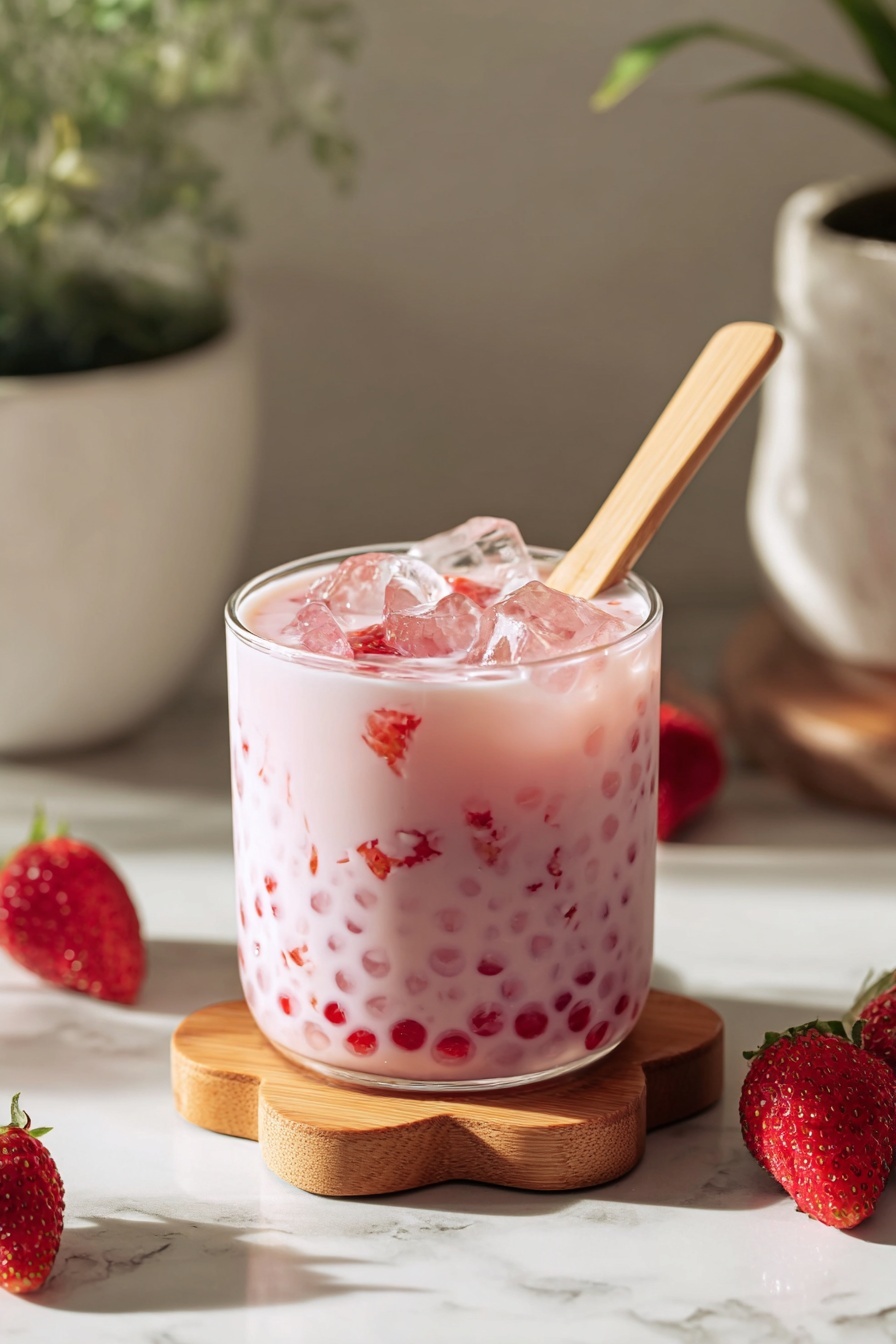
If you’re searching for a dessert that’s fresh, creamy, and just a little bit fun to eat, you’re in the right place. This Strawberry Coconut Sago Pudding Recipe is absolutely fan-freaking-tastic — it’s light yet satisfying, packed with juicy strawberries, silky coconut milk, and those little tapioca pearls that give it such a lovely, chewy texture. I first stumbled upon this recipe on a hot summer day, and ever since, it’s become my go-to when I want something refreshing but still a bit indulgent.
Why You’ll Love This Recipe
- Fresh flavors: The bright taste of strawberries pairs perfectly with creamy coconut milk for a naturally sweet treat.
- Unique texture: Those tiny sago pearls add a playful chewiness that makes each spoonful exciting.
- Easy to make: Despite how fancy it sounds, it’s straightforward to prepare with simple ingredients.
- Versatile: You can tweak it with add-ins or adjust sweetness to suit your taste perfectly.

Ingredients You’ll Need
The magic of this Strawberry Coconut Sago Pudding Recipe lies in its simple, fresh ingredients—with just the right balance to deliver creamy, fruity heaven. When shopping, look for ripe, fragrant strawberries to get the best flavor. Also, pick good quality coconut milk that’s rich and unsweetened for that authentic tropical touch.

- Fresh strawberries: Choose ripe, juicy berries for sweetness. I like to dice them finely so every spoonful has bits of strawberry.
- Coconut milk: A creamy full-fat coconut milk works best here to give the pudding body and richness.
- Granulated sugar: Adjust based on the natural sweetness of your strawberries — your taste buds are the boss!
- Small tapioca pearls (sago): These pearls give the pudding its signature chewy texture—make sure to use small ones for best results.
- Coconut jellies (nata de coco): Adds a refreshing, slightly crunchy contrast that I personally adore.
Variations
One of my favorite things about this Strawberry Coconut Sago Pudding Recipe is how easily it adapts to your preferences or whatever you have on hand. I’ve tried it with a few tweaks and it always turns out wonderful, so don’t hesitate to get creative!
- Using different fruits: Sometimes, I swap half the strawberries for mango or lychee for a tropical twist my family absolutely loves.
- Dairy-free adjustments: Since this recipe already uses coconut milk, it’s naturally dairy-free, but you can add a splash of almond or oat milk if you want to thin it out.
- Extra texture fun: Adding popping boba or other jelly cubes can be a hit at parties and gives a playful surprise with every bite.
- Sugar swaps: I’ve replaced granulated sugar with honey or maple syrup before, which adds a nice caramel note.
How to Make Strawberry Coconut Sago Pudding Recipe
Step 1: Blend the Strawberry Coconut Base
Start by blending half of your diced strawberries with the coconut milk and sugar until everything’s smooth and luscious. I always taste the mixture here to decide if it needs a little more sugar — each batch of strawberries has its own natural sweetness, so trust your palate. Then, pop this mixture in the fridge to chill while you move to the tapioca.
Step 2: Cook the Tapioca Pearls Properly
For the sago pearls, fill a big pot with plenty of water — trust me, more than you expect will make your life easier. Bring it to a rolling boil and stir in the pearls. Let them boil uncovered for 10 minutes, stirring occasionally to keep them from sticking together. Then cover the pot and let them steam off the heat for another 10 minutes until they become translucent. It’s important not to skip the rinsing step afterward to remove the excess starch and cool them down.
Step 3: Combine All Ingredients and Adjust Consistency
Drain the tapioca well and add them to your chilled strawberry mixture. Then toss in the remaining diced strawberries along with the coconut jellies. Stir to combine everything. If you feel the pudding is too thick, add a bit of water and stir until you reach your preferred consistency. Chill it in the fridge or serve immediately over ice.
Pro Tips for Making Strawberry Coconut Sago Pudding Recipe
- Plenty of water for cooking sago: I learned the hard way that too little water cooks tapioca unevenly and creates a gloopy mess, so always use a large pot and lots of water.
- Adjust sweetness cautiously: Since strawberries vary, add sugar gradually and taste as you go to avoid over-sweetening.
- Rinse the cooked sago well: This stops them from cooking further and removes excess starch, keeping the pearls pleasantly chewy and separate.
- Serve chilled for best flavor: The pudding tastes freshest when cold, so chilling the strawberry base and serving over ice really brings it to life.
How to Serve Strawberry Coconut Sago Pudding Recipe

Garnishes
I love topping this pudding with a few whole or sliced strawberries for that lovely pop of color and extra fresh bite. Sometimes a sprinkle of toasted coconut flakes adds a bit of crunch and a little more coconut flavor, which my family goes crazy for.
Side Dishes
This pudding shines on its own as a refreshing dessert, but if you want to serve it alongside something, light and simple snacks like a handful of coconut macaroons or fresh fruit salad are great companions that won’t overpower the flavors.
Creative Ways to Present
For parties or special occasions, I’ve served this pudding in individual clear glass cups layered with fresh strawberry slices and a drizzle of coconut cream on top — it looks so elegant and inviting. Adding edible flowers or mint leaves to the top makes it feel extra festive.
Make Ahead and Storage
Storing Leftovers
If you have leftovers (and you might, if you don’t finish it right away!), cover the pudding tightly and store it in the fridge for up to 3 days. Just a heads-up: the tapioca pearls thicken the pudding as it sits, so before eating again, I always stir in a splash of water or coconut milk to loosen it back up to my preferred texture.
Freezing
I usually don’t freeze this pudding because the texture of tapioca can change and become hard when frozen. In my experience, it’s best enjoyed fresh or refrigerated.
Reheating
This pudding is best served cold, so I don’t recommend reheating it. If you want to enjoy leftovers, just give it a good stir to bring back the creamy texture after chilling.
FAQs
-
Can I use frozen strawberries for this recipe?
Absolutely! Frozen strawberries work fine if fresh ones aren’t available. Just thaw and drain any excess liquid to avoid watering down the pudding. You might need to adjust the sugar since frozen berries can be less sweet.
-
What’s the difference between sago and tapioca pearls?
They are quite similar, but sago pearls are usually smaller and sometimes made from different starches depending on where you buy them. For this recipe, small tapioca pearls commonly labeled as “sago” in stores will both work.
-
How can I make this pudding less sweet?
You can reduce the sugar in the blending step or use less sweet fruits. Also, unsweetened coconut milk helps control the sweetness. Taste as you blend and add sugar slowly to get it just right.
-
Can I prepare this dessert in advance?
Yes, you can prepare most of it a few hours ahead. Keep the blended strawberry coconut mixture chilled and cook the tapioca pearls just before serving for the best chewy texture.
Final Thoughts
This Strawberry Coconut Sago Pudding Recipe has become one of my favorite ways to celebrate summer flavors in a bowl. It’s fun to make, so versatile, and that perfect balance of creamy, fruity, and chewy just keeps everyone coming back for more. If you give this recipe a try, I promise you’ll love how refreshing and satisfying it turns out—consider it your new happy dessert go-to. Enjoy every bite!
Print
Strawberry Coconut Sago Pudding Recipe
- Prep Time: 20 minutes
- Cook Time: 20 minutes
- Total Time: 40 minutes
- Yield: 8 servings
- Category: Dessert
- Method: Stovetop
- Cuisine: Asian
- Diet: Vegetarian
Description
Strawberry Sago is a refreshing and delightful dessert featuring chewy tapioca pearls, fresh diced strawberries, creamy coconut milk, and sweet coconut jellies. This chilled pudding combines smooth blended strawberries with cooked tapioca for a perfect balance of texture and flavor, ideal for warm days or a light sweet treat.
Ingredients
Strawberry Mixture
- 600 g fresh strawberries, finely diced
- 400 g coconut milk (1 can)
- 50 g granulated sugar, adjust to taste
Tapioca Pearls
- 150 g small tapioca pearls
Add-ins
- 225 g coconut jellies (coconut gel or nata de coco), drained
Instructions
- Blend: Add half (300 g) of the diced strawberries, coconut milk, and sugar to a blender. Blend until smooth. Taste and add more sugar if needed. Pour the mixture into a large serving bowl and chill in the fridge while cooking tapioca pearls.
- Cook tapioca pearls: Fill a medium pot almost full with water and bring to a boil on the stovetop. Add the tapioca pearls and stir. Boil uncovered for 10 minutes, stirring occasionally. Remove from heat, cover the pot, and let steam for another 10 minutes until pearls are translucent.
- Drain: Pour tapioca pearls into a fine mesh sieve and rinse under cold water to stop cooking and remove excess starch. Keep submerged in cold water if not used immediately; otherwise, drain well before using.
- Mix: Add the remaining diced strawberries, coconut jellies, and any additional desired add-ins to the chilled strawberry mixture. Stir well. Add water to adjust the consistency as desired. Serve cold.
Notes
- When cooking tapioca pearls, use a large pot with plenty of water to prevent them from sticking and to keep the water from becoming too thick and starchy.
- The sugar amount depends on the sweetness of the strawberries; adjust between 50 g to 100 g as needed.
- Store the strawberry sago covered in the fridge for up to 3 days. Stir in water before serving if it thickens during storage.
- Optional add-ins include various jellies, popping boba, fresh fruits, or ice for an extra refreshing touch.
Nutrition
- Serving Size: 1 serving (approx. 200g)
- Calories: 190 kcal
- Sugar: 15 g
- Sodium: 25 mg
- Fat: 7 g
- Saturated Fat: 6 g
- Unsaturated Fat: 1 g
- Trans Fat: 0 g
- Carbohydrates: 28 g
- Fiber: 2 g
- Protein: 2 g
- Cholesterol: 0 mg